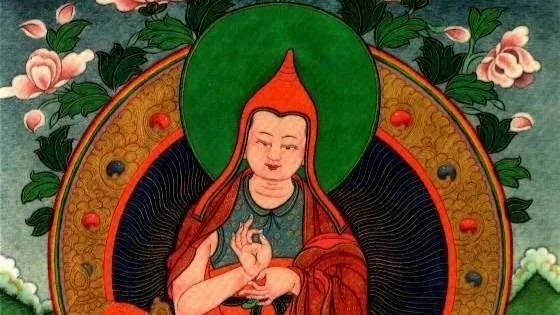
“As 37 Práticas do Bodisatva”
compostas por Gyalse Ngulchu Thogme no século XIV.
Podemos começar entendendo que um texto escrito por um eremita budista no Tibete por volta de mil trezentos, e que ainda se faz presente e relevante nos dias de hoje, deve ser no mínimo brilhante.
O brilho desta preciosidade atravessou a escuridão de cerca de 725 anos até chegar aqui em nosso confuso mundo moderno.
Brilho esse que nasce no Tibete, diretamente dos ensinamentos budistas Mahayana, o Grande Veículo.
Considerado junto do famoso “O Caminho do Bodisatva”, de Shantideva, como o guia perfeito para a realização do ideal bodisatva, é a forma concisa que conduz à liberação dos sofrimentos do samsara e culmina na iluminação.
Na forma de ensinamento, os versos nos mostram como desenvolver a compaixão verdadeira e atitude benéfica em todas as situações cotidianas que encontramos ao longo de nossa existência.
As 37 práticas do bodisatva apresentadas aqui fornecem as direções para a realização completa do caminho do bodisatva.
Nama Lakeshvaraya
Though he sees that in all phenomena there is no coming and going, He strives solely for me sake of beings:
To the sublime teacher inseparable from Avalokiteshvara, me Protector of Beings,
I pay constant homage with respectful body, speech, and mind.
The perfect buddhas-source ofhappiness and ultimate peace- Exist through having accomplished the sacred Dharma,
And mat, in turn, depends on knowing how to practice it;
This practice o f the bodhisattvas I shall therefore now explain.
A Preparação:
Now that I have this great ship
a precious human life
so hard to obtain
I must carry myself and others
across the ocean of samsara
To that end, to listen, reflect and meditate
Day and night, without distraction,
is the practice of a bodhisattva.
In my native land
waves of attachment to friends and kin surge
Hatred fot enemies rages like fire
The darkness of stupidity
not caring what to adopt or avoid, thickens
To abandon my native land is me practice of a bodhisattva.
When unfavorable places are abandoned
disturbing emotions gradually fade
When there are no distractions
positive activities naturally increase
As awareness becomes clearer
confidence in the Dharma grows
To rely on solitude is the practice of a bodhisattva
Close friends who have long been together will separate
Wealth and possessions gained with much effort will be left behind
Consciousness, a guest, will leave the hotel of the body
To give up the concerns of this life is the practice of a bodhisattva
In bad company, the three poisons grow stronger
Listening, reflection, and meditation decline
And loving-kindness and compassion vanish
To avoid unsuitable friends is the practice of a bodhisattva
Through reliance on a true spiritual friend one's faults will fade
And good qualities will grow like a waxing moon
To consider him even more precious
Than one's own body is the practice ofa bodhisattva
Whom can worldly gods protect
Themselves imprisoned in samsara?
To take refuge in the Three Jewels
Who never fail those they protect is the practice ofa bodhisattva